The Hidden Reason Kids Struggle in School — Vision Problems
Many kids who appear “unfocused” or “struggling” in school actually have undiagnosed vision issues. So much of learning depends on vision: reading the board, following along in a book, working on a tablet, and catching a ball at recess. When a child can’t see clearly or comfortably, schoolwork gets harder, frustration grows, and it can look like a behavior or attention problem.
The start of each new school year is an ideal time to make sure your child’s eyes are ready for the work ahead.
Signs Your Child May Need an Eye Exam
- Squinting
- Headaches
- Rubbing eyes
- Holding books too close
- Decreased grades
- Avoiding reading
Other clues include covering one eye, tilting the head, losing their place while reading, sitting very close to the TV, or an eye that appears to turn in or out. If you notice any of these, schedule an exam. There’s no need to wait for a school screening.
Why Pediatric Eye Exams Matter
Most vision problems don’t cause pain, and kids don’t know to complain. Children usually assume everyone sees the same way they do. A child with blurry distance vision, or eyes that tire quickly up close, may never say a word about it. That’s why a yearly exam matters, even for kids who passed last year’s screening or seem to be doing fine.
Our exams check for:
- Myopia (nearsightedness). Difficulty seeing the board and other distant things. Myopia is becoming more common in children and often worsens as they grow.
- Amblyopia (lazy eye). An eye that doesn’t develop clear vision. It responds best to treatment when caught early.
- Eye teaming issues. Trouble getting both eyes to work together, which can cause double vision, eye strain, or losing their place while reading.
- Focusing problems. Difficulty shifting focus or keeping things clear up close, which can make homework exhausting.
Our doctors also check for farsightedness and astigmatism and evaluate the overall health of your child’s eyes. Learn more about our pediatric eye exams.
A School Screening Isn’t the Same as an Eye Exam
School and pediatrician vision screenings are useful, but they usually test only how well a child sees across the room. They can miss farsightedness, focusing problems, eye teaming issues, and eye health concerns. A comprehensive eye exam looks at all of these.
How Often Should Kids Have Eye Exams?
The American Optometric Association recommends a first eye exam between 6 and 12 months of age, at least one exam between ages 3 and 5, and an exam before first grade. After that, children should have an eye exam every year through age 18. Booking a yearly exam before school starts is an easy habit to remember.
Free Kids Vision Screening and Myopia Control
We offer a Free Kids Vision Screening for ages 5–17. It’s a quick, no-cost check that can flag possible problems. If anything needs a closer look, we’ll recommend a full exam.
If your child is nearsighted, ask us about myopia control. Options include Ortho-K, MiSight® 1 day contact lenses, Stellest® lenses, and low-dose atropine eye drops (an off-label use). Parents of children ages 5–12 can start with a free virtual myopia control consultation.
Back-to-School Eye Tips for Parents
- Book eye exams early, before schedules fill up.
- Encourage the 20-20-20 rule during homework: every 20 minutes, look 20 feet away for 20 seconds.
- Make time for outdoor play after school, with sunglasses and a hat for sunny Treasure Coast afternoons.
- Set up a homework spot with good lighting, and keep books and screens at a comfortable distance.
- Build in screen breaks, and keep devices out of the bedroom at bedtime.
- Ask your child’s teacher to let you know if they notice squinting or trouble seeing the board.
Ready for the School Year
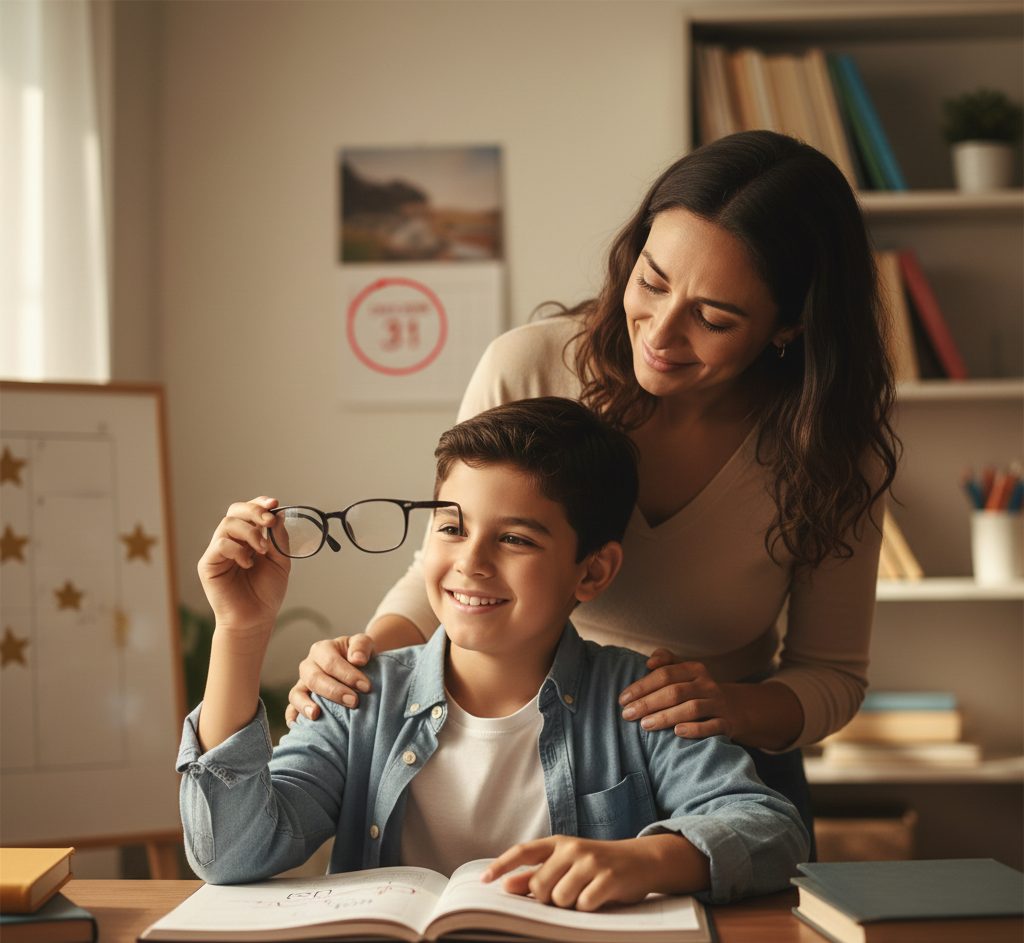
If your child needs glasses, our optical team will help them choose frames they’ll actually want to wear. Browse our eyeglasses.
Beat the back-to-school rush. Request an appointment online, or Call or Text 772-208-3924. Stuart Family Eye Care cares for Stuart families, and we look forward to seeing yours. Our office is open Monday through Friday, 9:00am to 5:00 p.m.