Why More Kids Are Becoming Nearsighted
Childhood myopia is on the rise, especially among indoor, digital-age kids. Myopia, or nearsightedness, means faraway objects look blurry while things up close stay clear. Researchers around the world have observed more children becoming nearsighted, and at younger ages, than in earlier generations.
This matters because myopia typically worsens as a child grows, and the earlier it begins, the more time it has to progress. Higher levels of myopia are associated with a greater lifetime risk of eye problems such as retinal detachment, glaucoma, and cataracts. Thicker lenses are only part of the concern.
Top Causes
Myopia results from a combination of genes and environment. The biggest factors include:
Excessive screen time
Phones, tablets, and video games keep children’s eyes focused up close for hours. Long periods of near work without breaks are linked to myopia starting and getting worse.
Too little outdoor sunlight
Time spent outdoors appears to help protect children’s eyes. Researchers believe bright natural light and looking at distant objects both contribute. Many kids today spend much less time outside than children did a generation ago.
Genetics
Children with one or both nearsighted parents are more likely to become nearsighted too. If you or your partner wear glasses to see far away, keep a close watch on your child’s vision.
Close-up reading habits
Reading is wonderful, but holding books very close and reading for long stretches without breaks places extra demand on the eyes.
Simple Habits That Can Help
You don’t need to ban screens to make a difference. Try these everyday habits:
- Get outside. Encourage outdoor play every day, whether at the park, the beach, or in the backyard. Remember sunglasses and a hat.
- Follow the 20-20-20 rule. After every 20 minutes of close work, look at something 20 feet away for 20 seconds.
- Keep a healthy distance. Encourage kids to hold books and devices at a comfortable distance instead of right up to their face.
- Set screen limits. Build in breaks, and keep devices out of the bedroom at night.
- Schedule yearly eye exams. Finding myopia early gives you more options.
How We Control Myopia Progression
Glasses and regular contacts help kids see clearly, but they don’t slow myopia from getting worse. Myopia control treatments are designed to do that. At Stuart Family Eye Care, options include:
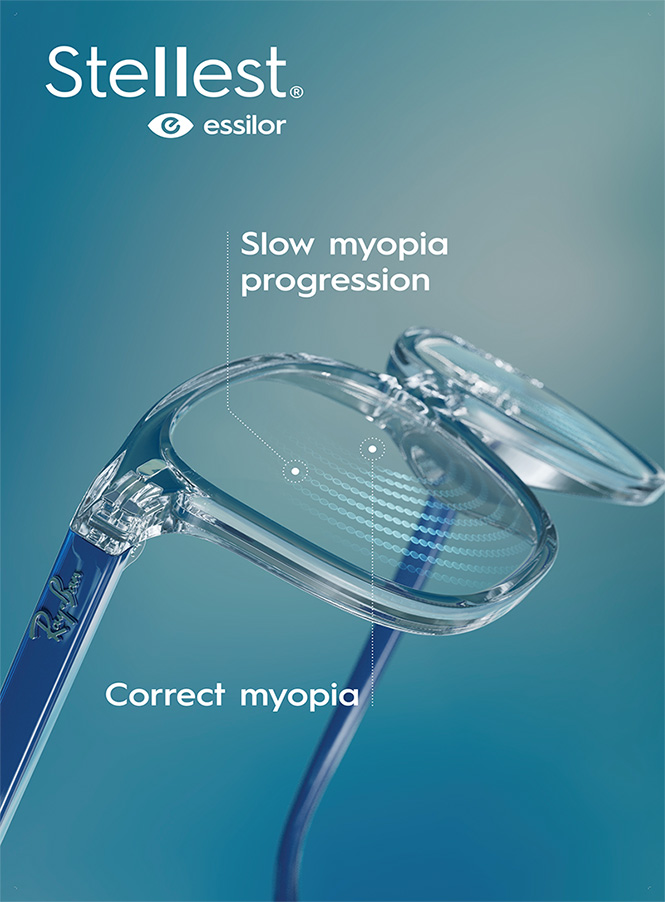
- Stellest™ lenses. Eyeglass lenses designed to slow myopia progression in children.
- Ortho-K. Custom overnight contact lenses that gently reshape the front of the eye while your child sleeps, so they can see clearly during the day without glasses or contacts.
- MiSight® 1 day. Daily disposable soft contact lenses designed for myopia control.
- Atropine therapy. Low-dose atropine eye drops used at bedtime. Using atropine for myopia control is off-label, and we’ll explain what that means.
Every child is different, and results vary. No treatment can promise to stop or reverse myopia. We’ll talk through which option fits your child’s age, prescription, and lifestyle. Learn more on our Myopia Control page, and read Why Myopia Control Matters.
Signs Your Child May Be Nearsighted
Kids often don’t realize their vision is blurry. Watch for squinting, sitting close to the TV, trouble seeing the board, headaches, or frequent eye rubbing. Our pediatric eye exams check children for myopia and other vision problems. We also offer a Free Kids Vision Screening for ages 5–17.
Schedule a Myopia Evaluation
Wondering whether your child is a good candidate for myopia control? Call or Text 772-208-3924 to reach our family eye doctors in Stuart and schedule an evaluation. Parents of children ages 5–12 can start with a free virtual myopia control consultation, or book a full eye exam for your child. You can also request an appointment online. Our office is open Monday through Friday, 9:00am to 5:00 p.m.